“You sure that’s bread?” my roommate asked when I pulled the Dutch oven lid off, releasing a cloud of fragrant steam. Honestly, I couldn’t believe it myself. I had tossed together flour, water, a sprinkle of yeast, fresh rosemary from the windowsill, and a pinch of sea salt, then forgotten about it all day. No kneading, no fancy mixers—just patience and a bit of Dutch oven magic.
It started on a particularly hectic afternoon when the last thing I wanted was a complicated baking project. I was craving the kind of crusty, aromatic bread that feels like a warm hug but was too drained for anything too involved. The no-knead method intrigued me, but I was skeptical—bread that didn’t require hours of work? I had to try.
By dinner time, my tiny kitchen smelled like a bakery. The crust crackled under my fingertips, the rosemary and sea salt teasing the senses with every bite. It wasn’t just bread; it was a surprise that I could make something this delicious with minimal effort. That first loaf became a repeat guest at my table, a quiet reminder that sometimes the best things come from simple, unplanned moments.
It stuck with me because it’s approachable for anyone feeling intimidated by bread baking but still craving that satisfying crust and herbaceous twist. This Crispy Dutch Oven No-Knead Rosemary Sea Salt Bread offers a clean, rustic charm that pairs beautifully with everything from hearty stews to a simple drizzle of olive oil. It’s the kind of loaf that invites you to slow down and savor.
Why You’ll Love This Crispy Dutch Oven No-Knead Rosemary Sea Salt Bread Recipe
After making this recipe over and over, I can say with confidence it hits all the right notes, especially if you’re new to baking or short on time but want a quality loaf.
- Quick & Easy: This bread comes together with just a few simple steps and minimal hands-on time—perfect for when you want fresh bread without the hassle.
- Simple Ingredients: No exotic items here—flour, yeast, water, rosemary, and sea salt. You probably already have these in your pantry or garden.
- Perfect for Cozy Meals: Whether you’re serving it alongside a hearty soup or a quick salad, it’s the ideal companion.
- Crowd-Pleaser: The aromatic rosemary combined with the crunchy sea salt topping always gets compliments, even from those who claim they “don’t like homemade bread.”
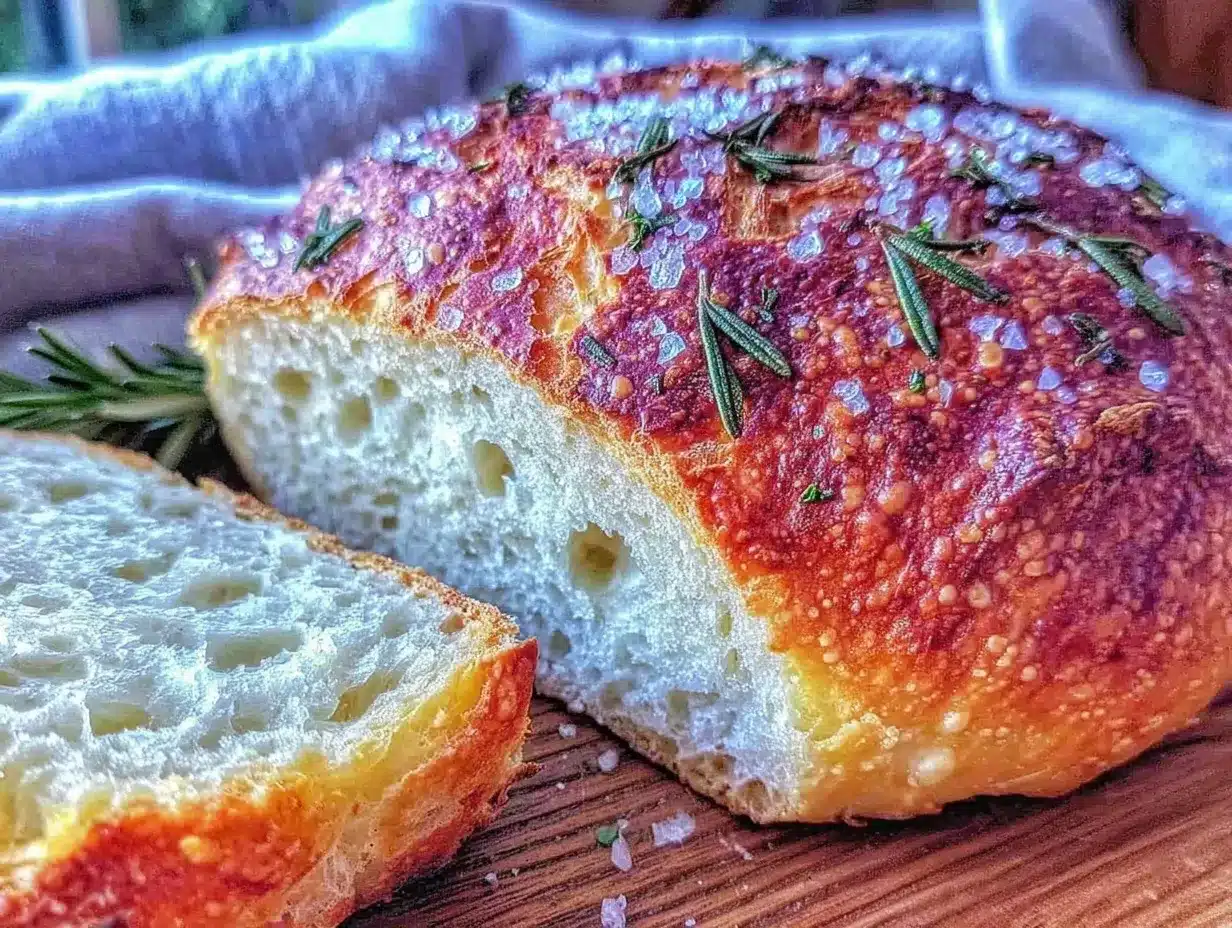
- Unbelievably Delicious: The crust is satisfyingly crisp, while the crumb stays soft and flavorful. The rosemary adds that herbal lift, and the sea salt gives a perfect finishing touch.
This isn’t just another no-knead bread recipe; the secret is baking it in a Dutch oven, which traps steam and creates that bakery-worthy crust. Plus, sprinkling flaky sea salt on top before baking adds a little crunch and bursts of flavor that make this loaf stand out. Honestly, once you try it, you’ll understand why it’s become my go-to for impressing guests without breaking a sweat.
What Ingredients You Will Need
This recipe calls for a handful of everyday ingredients that come together to create something truly special. The simplicity is what makes it so satisfying, and you can tweak things easily based on what’s on hand.
- All-purpose flour (3 cups / 375 grams) – I recommend King Arthur flour for consistent results.
- Active dry yeast (1/4 teaspoon) – Just a pinch keeps things slow and flavorful.
- Warm water (1 1/2 cups / 360 ml), about 100°F (38°C) – helps activate the yeast gently.
- Fresh rosemary (2 tablespoons, finely chopped) – Adds that earthy, piney aroma.
- Sea salt flakes (1 tablespoon, plus extra for sprinkling) – Use coarse flakes for crunch and visual appeal.
- Olive oil (1 tablespoon) – Optional, to lightly oil the dough for better texture.
If fresh rosemary isn’t available, dried rosemary works but use about half as much to avoid overpowering. Also, you can swap all-purpose flour with bread flour for a chewier crumb, or try whole wheat flour for a nutty twist (just expect a denser loaf). For a gluten-free alternative, almond or oat flour blends may require recipe adjustments, but they’re worth experimenting with.
Equipment Needed
- Dutch oven (5 to 6-quart) – The star of the show, it traps steam and creates that crispy crust. I’ve used both cast iron and enameled versions; both work well, but cast iron retains heat longer.
- Mixing bowl – A large, non-reactive bowl to mix and rest the dough.
- Wooden spoon or spatula – For stirring the wet and dry ingredients together.
- Kitchen towel or plastic wrap – To cover the dough during fermentation.
- Measuring cups and spoons – Precision helps, but the recipe is forgiving.
- Cooling rack – Essential for letting the bread rest and keep its crust crispy.
If you don’t have a Dutch oven, a heavy oven-safe pot with a tight lid can work as a substitute. Just preheat it well to mimic the bakery steam effect. I keep my Dutch oven seasoned and dry between uses, which really helps prevent sticking and preserves its natural non-stick surface.
Preparation Method
- Mix the dough: In your large bowl, combine 3 cups (375 g) flour, 1/4 teaspoon active dry yeast, and 1 tablespoon chopped fresh rosemary. Stir in 1 1/2 cups (360 ml) warm water and 1 tablespoon olive oil if using. Mix until a shaggy dough forms; it will be sticky and loose. This takes about 5 minutes.
- First rise: Cover the bowl tightly with plastic wrap or a clean towel. Let the dough sit at room temperature for 12 to 18 hours (overnight works great). You’ll know it’s ready when the surface is bubbly and doubled in size.
- Shape the dough: Lightly flour a clean surface. With floured hands, gently scoop the dough out and fold it over itself once or twice to shape it into a ball. Don’t overwork it—think gentle, slow folds. This step takes about 2 minutes.
- Second rise: Place the dough seam-side down on a piece of parchment paper. Cover with a towel and let it rise for 1 to 2 hours until puffed and nearly doubled.
- Preheat the oven and Dutch oven: About 30 minutes before baking, place your empty Dutch oven with the lid on in the oven and preheat to 450°F (230°C). This step is crucial for that crispy crust.
- Prepare for baking: When the dough is ready, carefully remove the hot Dutch oven. Lift the parchment paper with the dough and place it inside the Dutch oven. Sprinkle the top generously with sea salt flakes (about 1 tablespoon).
- Bake covered: Cover with the lid and bake for 30 minutes. The steam trapped inside helps develop the crust.
- Finish baking uncovered: Remove the lid and bake for another 15 to 20 minutes until the crust is deep golden brown and crisp. The bread should sound hollow when tapped.
- Cool completely: Transfer the loaf to a cooling rack and let it rest for at least 1 hour before slicing. This lets the crumb finish setting and keeps the crust crunchy.
If the crust browns too quickly, you can tent it with foil during the last 10 minutes. Also, if your dough feels too sticky to handle during shaping, dust your hands and surface lightly with flour but resist adding too much — a slightly wet dough yields the best crumb.
Cooking Tips & Techniques for Perfect No-Knead Bread
Here’s what I’ve picked up making this recipe multiple times (sometimes twice a week):
- Patience is your friend: The long, slow rise develops flavor and texture. Don’t rush this step or you’ll miss that depth.
- Temperature matters: Use warm—not hot—water to activate the yeast gently. Too hot and you’ll kill it; too cold and it won’t rise properly.
- Don’t skip preheating the Dutch oven: The super hot pot creates steam that crisps the crust. I’ve tried baking the dough in a cold pot, and the crust just isn’t the same.
- Use parchment paper for easy transfer: Lifting the dough with parchment makes it safer to handle the hot Dutch oven, especially if you’re new to this.
- Sea salt on top isn’t just garnish: It adds a crunch and a burst of flavor that contrasts beautifully with the soft crumb inside.
- Let the bread cool fully: Slicing too soon makes it gummy. I know it’s tempting, but waiting pays off with better texture.
One mistake I made early on was not flouring the surface enough, which made shaping a sticky mess. Now I lightly dust with flour but keep it minimal. Also, if your dough doesn’t rise, check your yeast’s expiration date — fresh yeast makes all the difference.
Variations & Adaptations
This recipe is a great base for experimenting. Here are a few twists I’ve tried or recommend:
- Herb swaps: Try thyme, sage, or oregano instead of rosemary for different flavor profiles. Each herb brings its own earthy note.
- Cheese addition: Stir in 1/2 cup grated Parmesan or sharp cheddar for a savory, melty surprise inside the loaf.
- Whole wheat blend: Replace up to half the all-purpose flour with whole wheat flour. It adds nuttiness and a bit more density.
- Garlic infusion: Add a couple of minced garlic cloves to the dough or sprinkle roasted garlic pieces on top before baking for a fragrant punch.
- Gluten-free approach: Use a gluten-free flour blend designed for bread and add 1 teaspoon xanthan gum to help with structure (results may vary).
For different cooking methods, I’ve seen this bread baked on a pizza stone with a pan of water in the oven to create steam. It’s less foolproof than the Dutch oven but works in a pinch. Personally, I stick to the Dutch oven method — it’s just too easy.
Serving & Storage Suggestions
This bread shines best fresh, served at room temperature or slightly warm. I like slicing it thick and enjoying it with butter or dipping it in olive oil and balsamic vinegar. It’s also fantastic alongside roasted meats or a simple salad for a quick meal.
To store, wrap the cooled loaf in a clean kitchen towel or paper bag to keep the crust crisp for up to two days at room temperature. Avoid plastic bags unless you don’t mind the crust softening.
If you want to save it longer, slice and freeze the bread in a zip-top bag. Toast slices straight from the freezer for a fresh-baked feel.
Reheating in a 350°F (175°C) oven for about 10 minutes revives the crust nicely. Over time, the rosemary scent deepens, making each slice more aromatic.
Nutritional Information & Benefits
This Crispy Dutch Oven No-Knead Rosemary Sea Salt Bread is relatively simple nutritionally, relying on basic pantry ingredients:
| Nutrient | Per Serving (1 slice) |
|---|---|
| Calories | 150 |
| Carbohydrates | 30g |
| Protein | 4g |
| Fat | 1.5g |
| Fiber | 1g |
The rosemary adds antioxidants and anti-inflammatory compounds, while sea salt flakes contribute trace minerals. Using unrefined sea salt can add a subtle mineral boost compared to table salt.
While this bread is not gluten-free by default, swapping flours as noted can accommodate some dietary needs. It’s a wholesome choice for those wanting homemade bread without unnecessary additives.
From a wellness perspective, this bread fits well into balanced meals, especially paired with protein and veggies, helping you enjoy carbs without feeling weighed down.
Conclusion
This Crispy Dutch Oven No-Knead Rosemary Sea Salt Bread has become a quiet staple in my kitchen, a reminder that great bread doesn’t have to be complicated. It’s approachable, flavorful, and has that irresistible crunchy crust with a tender crumb.
Feel free to tweak the herbs or try adding cheese to make it your own. I love that it fits so many occasions — from a solo breakfast to complementing a simple one-pot dinner. I hope it finds a place in your kitchen as well.
If you give it a try, I’d love to hear how you customize it or what you pair it with. Baking bread is such a personal journey, and sharing that makes it all the more rewarding.
Here’s to many crispy, rosemary-scented slices ahead!
FAQs About Crispy Dutch Oven No-Knead Rosemary Sea Salt Bread
Can I make this bread without a Dutch oven?
Yes, you can bake it on a preheated pizza stone or heavy baking sheet with a pan of water in the oven to add steam. The crust won’t be quite as crispy, but it still works well.
How long can I store the bread at room temperature?
Keep it wrapped in a kitchen towel or paper bag for up to two days. Beyond that, the crust softens and the bread starts to stale.
Can I use dried rosemary instead of fresh?
You can, but reduce the amount by about half to prevent the flavor from becoming overpowering or bitter.
Is it possible to add other herbs or flavors?
Absolutely! Thyme, oregano, or garlic work great. You could even mix in some sun-dried tomatoes or olives for a Mediterranean twist.
Why is my bread dense or gummy inside?
This usually happens if the dough didn’t rise long enough or was baked before fully proofed. Make sure to allow the dough to bubble and double during the first rise, and let it rest after shaping before baking.
Pin This Recipe!

Crispy Dutch Oven No-Knead Rosemary Sea Salt Bread

A simple, no-knead bread recipe baked in a Dutch oven for a crispy crust and soft crumb, flavored with fresh rosemary and sea salt. Perfect for beginners and cozy meals.
- Prep Time: 15 minutes
- Cook Time: 45 minutes
- Total Time: 13 hours
- Yield: 1 loaf (about 8 servings) 1x
- Category: Bread
- Cuisine: American
Ingredients
- 3 cups (375 grams) all-purpose flour
- 1/4 teaspoon active dry yeast
- 1 1/2 cups (360 ml) warm water (about 100°F / 38°C)
- 2 tablespoons fresh rosemary, finely chopped
- 1 tablespoon sea salt flakes, plus extra for sprinkling
- 1 tablespoon olive oil (optional)
Instructions
- Mix the dough: In a large bowl, combine flour, yeast, and chopped rosemary. Stir in warm water and olive oil if using until a shaggy, sticky dough forms (about 5 minutes).
- First rise: Cover the bowl tightly with plastic wrap or a clean towel. Let the dough sit at room temperature for 12 to 18 hours until bubbly and doubled in size.
- Shape the dough: Lightly flour a clean surface. Gently scoop the dough out and fold it over itself once or twice to form a ball, handling gently (about 2 minutes).
- Second rise: Place the dough seam-side down on parchment paper. Cover with a towel and let rise for 1 to 2 hours until puffed and nearly doubled.
- Preheat oven and Dutch oven: Place empty Dutch oven with lid in the oven and preheat to 450°F (230°C) about 30 minutes before baking.
- Prepare for baking: Carefully remove hot Dutch oven. Lift dough with parchment paper and place inside. Sprinkle top generously with sea salt flakes (about 1 tablespoon).
- Bake covered: Cover with lid and bake for 30 minutes to trap steam and develop crust.
- Finish baking uncovered: Remove lid and bake for another 15 to 20 minutes until crust is deep golden brown and crisp. Bread should sound hollow when tapped.
- Cool completely: Transfer loaf to a cooling rack and let rest at least 1 hour before slicing to set crumb and keep crust crunchy.
Notes
Use warm water (about 100°F) to activate yeast gently. Preheat Dutch oven for best crust. Use parchment paper to transfer dough safely. Let bread cool fully before slicing to avoid gummy texture. If crust browns too fast, tent with foil. Fresh rosemary preferred; use half amount if dried. Substitute herbs or add cheese for variations.
Nutrition
- Serving Size: 1 slice
- Calories: 150
- Fat: 1.5
- Carbohydrates: 30
- Fiber: 1
- Protein: 4
Keywords: no-knead bread, Dutch oven bread, rosemary bread, sea salt bread, easy bread recipe, beginner bread, crusty bread