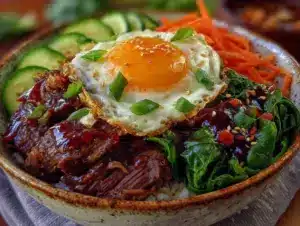
“Are you sure you want to put all those veggies on one plate?” my roommate asked, raising an eyebrow as I unloaded a colorful jumble of sautéed spinach, shredded carrots, and mushrooms next to a sizzling skillet of marinated beef. Honestly, I was half skeptical myself the first few times I made this Flavorful Korean Beef Bibimbap Bowl with Fried Egg. The dish looked almost too vibrant, like a painter’s palette rather than dinner.
But that night, after mixing everything together with the runny yolk and a generous drizzle of spicy-sweet gochujang sauce, I was hooked. The way the savory beef melded with crisp, fresh vegetables and that comforting warm rice — it just clicked. I found myself craving it multiple times a week, tweaking the balance here and swapping out a veggie there.
What really sealed the deal was how it turned a chaotic weeknight into a calming ritual. I’d come home tired, toss this bowl together, and suddenly feel like I’d treated myself without any fuss. Plus, it’s a one-bowl wonder that’s packed with flavors and textures you don’t get in the usual weeknight meals. It’s become my go-to when I want something comforting but not heavy, colorful but not complicated.
So if you’re looking for a homemade dinner idea that’s both satisfying and a little adventurous, this Korean beef bibimbap bowl might just become your quiet little secret too. It’s the kind of meal you slow down for, savor every bite, and maybe even find yourself making a little extra fried egg just in case.
Why You’ll Love This Recipe
After countless trials in my kitchen, this Flavorful Korean Beef Bibimbap Bowl with Fried Egg stands out for a few reasons that I’m happy to share:
- Quick & Easy: You can have this ready in about 30 minutes, perfect for those busy evenings when you want something delicious but don’t want to spend hours cooking.
- Simple Ingredients: No need for exotic or hard-to-find items. Most ingredients are pantry staples or easy to grab at any grocery store.
- Perfect for Dinner or Meal Prep: This bowl works great for a cozy dinner or made in advance for quick lunches. It keeps well and tastes even better the next day.
- Crowd-Pleaser: I’ve served this to friends who usually shy away from spicy food, and they ended up asking for seconds — that’s a win in my book.
- Unbelievably Delicious: The combo of tender marinated beef, fresh vegetables, and that fried egg yolk melting into the rice? Seriously next-level comfort food.
This recipe isn’t just another bibimbap. The beef is marinated with a special blend of soy sauce, sesame oil, garlic, and a touch of brown sugar, giving it a perfectly balanced savory-sweet flavor that’s not overpowering. Plus, frying the egg to just the right runny stage adds a creamy richness to every bite. It’s these little details I learned after a few kitchen mishaps that make this bowl stand out.
Honestly, once you try this, you might find yourself coming back to it as your quick-fix comfort meal — just like I did. And if you’re curious about other fuss-free family dinners with bold flavors, you might enjoy my easy St. Patrick’s Day beef sheet pan dinner that shares that same “throw-it-together” spirit.
What Ingredients You Will Need
This Flavorful Korean Beef Bibimbap Bowl with Fried Egg uses simple, wholesome ingredients that come together to deliver big flavor with no extra fuss. Most of these are pantry staples or fresh produce you can find year-round, and you can easily swap some items based on what you have on hand.
- For the Beef Marinade and Meat:
- Ground beef (80/20 lean-to-fat ratio recommended for juiciness, about 1 pound / 450 grams)
- Soy sauce (I like Kikkoman for that balanced saltiness, 3 tablespoons)
- Sesame oil (2 teaspoons, adds that classic nutty aroma)
- Brown sugar (1 tablespoon, to add subtle sweetness)
- Garlic (2 cloves, finely minced for punchy flavor)
- Fresh ginger (1 teaspoon, grated for warmth)
- Black pepper (freshly ground, to taste)
- Vegetables and Sides:
- Cooked white rice (2 cups / 400 grams, preferably short-grain or sushi rice for sticky texture)
- Spinach (2 cups fresh, quickly sautéed or blanched)
- Carrots (1 medium, julienned or shredded for crunch)
- Shiitake mushrooms (1 cup sliced, sautéed for umami depth)
- Bean sprouts (1 cup, rinsed and lightly cooked or raw if preferred)
- For Serving & Garnish:
- Eggs (1 per serving, fried sunny side up)
- Gochujang (Korean chili paste, 2 tablespoons — this is your spicy-sweet magic! Adjust to taste)
- Sesame seeds (toasted, 1 teaspoon for nuttiness)
- Green onions (thinly sliced, a handful for fresh bite)
If you want a gluten-free tweak, swap soy sauce for tamari. And if you don’t have shiitake mushrooms, cremini or button mushrooms work just fine. When fresh spinach isn’t around, frozen works too — just squeeze out excess water before sautéing.
For a plant-based twist, try swapping the ground beef with crumbled tofu or seasoned lentils; they soak up the marinade beautifully. If you want to keep things keto-friendly, swap the rice for cauliflower rice — it’s surprisingly satisfying.
Want more inspiration for easy weekday meals with a twist? The quick beef salad bowl recipe on my site shares a similar no-fuss vibe but with fresh greens and punchy dressing.
Equipment Needed
You won’t need any fancy gadgets for this bowl — just everyday kitchen tools that most home cooks already have.
- Large skillet or frying pan (to cook the beef and sauté vegetables)
- Medium saucepan with lid (for cooking rice)
- Small frying pan (for frying the eggs sunny side up)
- Mixing bowls (for preparing and tossing ingredients)
- Sharp knife and cutting board (for slicing vegetables)
- Spatula or wooden spoon (for stirring and mixing)
If you happen to have a rice cooker, that’s a bonus — it makes cooking rice foolproof and frees up stove space, which is handy when juggling multiple pans.
For those on a budget, a non-stick skillet will make frying the eggs easier, but a well-seasoned cast iron works beautifully too and adds great flavor to the beef.
Keeping your knives sharp will speed up prep and make slicing veggies more enjoyable, so don’t overlook that simple maintenance tip!
Preparation Method
- Cook the Rice: Rinse 1 cup (200 grams) of short-grain rice under cold water until the water runs clear. Add to a saucepan with 1 1/4 cups (300 ml) water. Bring to a boil, then reduce heat to low, cover, and simmer for 15 minutes. Remove from heat and let it sit, covered, for 10 minutes. Fluff with a fork before serving. (If using a rice cooker, cook according to manufacturer’s instructions.)
- Prepare the Vegetables: While the rice cooks, sauté the spinach in a splash of sesame oil until just wilted, about 2 minutes; season lightly with salt and set aside. In the same pan, cook shiitake mushrooms over medium heat with a pinch of salt until tender, about 4 minutes. Julienne or shred the carrot and rinse the bean sprouts; set these aside raw or lightly blanch in boiling water for 30 seconds if you prefer them softer.
- Marinate and Cook the Beef: In a bowl, combine ground beef with soy sauce, sesame oil, brown sugar, minced garlic, grated ginger, and black pepper. Mix gently but thoroughly, being careful not to overwork the meat. Heat a large skillet over medium-high heat, then add the beef mixture. Break it apart with a spatula and cook until browned and cooked through, about 6-8 minutes. Taste and adjust seasoning if needed.
- Fry the Eggs: In a small non-stick pan, heat a teaspoon of oil over medium heat. Crack the eggs carefully and fry sunny side up until the whites are set but the yolks remain runny, about 3-4 minutes. Season lightly with salt and pepper.
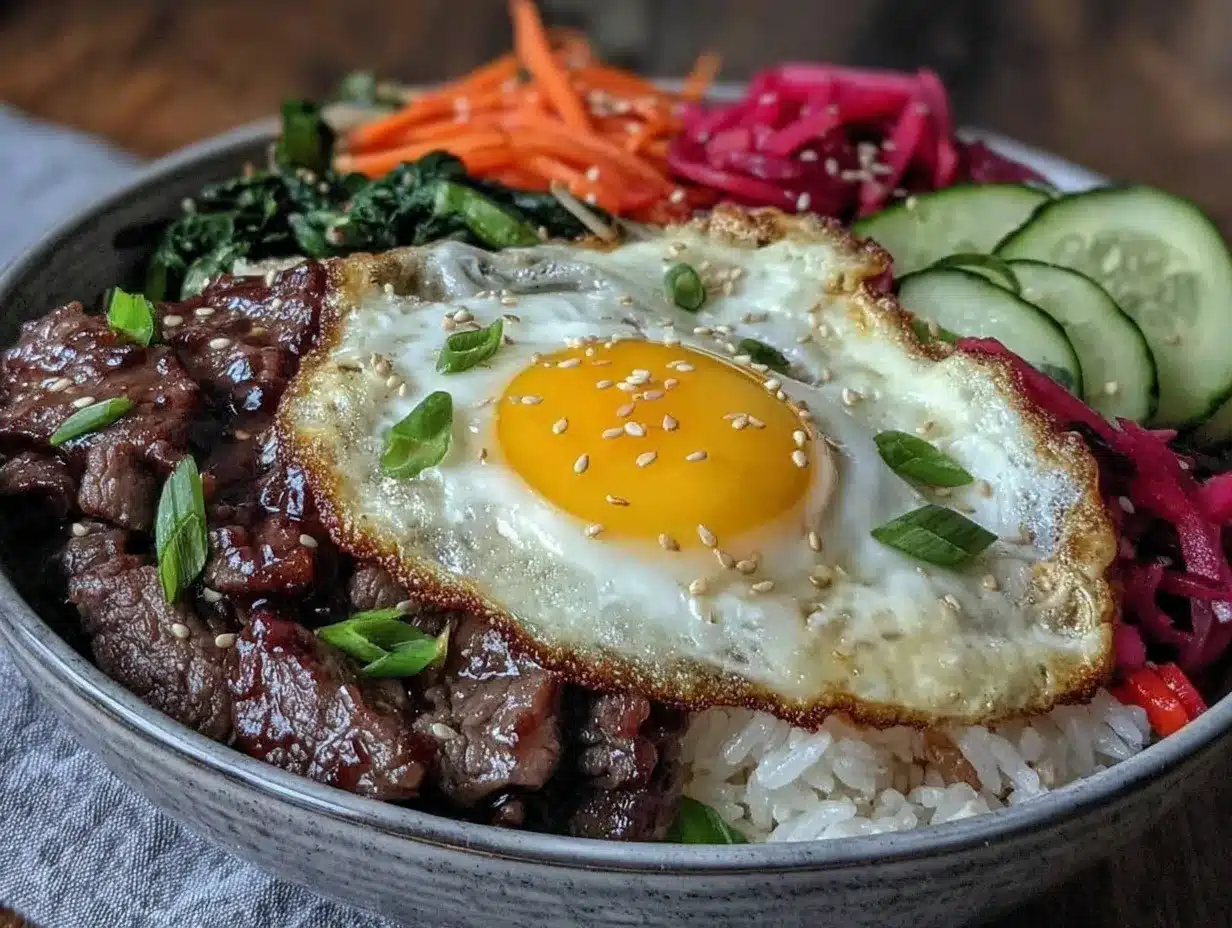
- Assemble the Bibimbap Bowl: Scoop warm rice into bowls. Arrange the cooked beef, sautéed spinach, mushrooms, shredded carrots, and bean sprouts in sections around the rice. Place the fried egg on top. Drizzle with gochujang sauce (start with 1 tablespoon and add more to taste). Sprinkle toasted sesame seeds and green onions over everything.
- Serve & Mix: Encourage everyone to mix their bowl thoroughly before eating — that’s where the magic happens, as the spicy sauce and runny egg yolk coat every bite. Enjoy immediately for the best flavors and textures.
Pro tip: If your gochujang is too thick, thin it out with a little water or rice vinegar to your preferred consistency. I learned that after a few sticky encounters with overly thick sauce clumps!
Cooking Tips & Techniques
Getting this bibimbap bowl just right took a few experiments, so here’s what I’ve learned along the way:
- Don’t Overcook the Beef: Keep the heat medium-high and stir frequently so the beef browns evenly without drying out. Juicy, tender beef makes a huge difference.
- Balance the Veggies: Each vegetable should be cooked just enough to keep some bite and freshness. Overcooked spinach or mushy mushrooms will weigh the bowl down.
- Nail the Fried Egg: The yolk is key for richness. Use a non-stick pan and medium heat. If you’re nervous about runny yolks, cook a little longer or cover the pan briefly to cook the top whites without flipping.
- Adjust the Spice Level: Gochujang can vary in heat. Start modestly and add more as you mix. You can also blend gochujang with a little honey or sesame oil to mellow it out.
- Rice Matters: Using short-grain or sushi rice gives that sticky texture perfect for mixing. Long-grain rice can be used but doesn’t bind as well.
- Multitask Wisely: Cook rice first, then use that cooking time to prep and sauté your veggies and beef. This keeps everything efficient without rushing.
One time, I accidentally added too much soy sauce and had to balance it with extra sugar and sesame oil — that taught me to measure carefully but also trust your taste buds to adjust on the fly.
Variations & Adaptations
Feel free to play around with this bowl to suit your mood or dietary needs:
- Vegetarian Version: Swap ground beef for pan-fried tofu cubes or sautéed mushrooms for a meaty texture without animal protein.
- Spice Level: If you like it milder, replace gochujang with a mix of soy sauce and a touch of honey or use a mild chili paste.
- Rice Substitutes: Try brown rice for more fiber or cauliflower rice to keep it low-carb and lighter.
- Additional Veggies: Add kimchi for that classic Korean tang, or roasted sweet potatoes for a touch of sweetness and heartiness.
- Protein Swaps: Ground turkey or chicken work well if you want a leaner meat option. Just adjust cooking time accordingly.
I once made this bowl with leftover shredded rotisserie chicken and it still tasted fantastic — a good reminder that this recipe is forgiving and flexible. Also, if you’re interested in quick air fryer meals, my crispy air fryer turkey recipe is a great match for busy nights.
Serving & Storage Suggestions
This bibimbap bowl is best enjoyed fresh and warm, right after assembly. The fried egg yolk combines with the gochujang and beef juices to create a rich sauce that clings to every bite.
If you’re serving for guests, consider presenting the components separately so everyone can mix their bowls to their liking — it makes for a fun, interactive meal.
Leftovers keep well in the fridge for up to 3 days if stored in an airtight container. The rice may firm up, so reheat gently in the microwave with a sprinkle of water, or warm in a skillet to bring back some texture.
While the fried egg is best fresh, you can omit it in advance and add a freshly cooked egg when reheating. Flavors meld nicely overnight, especially the marinated beef and vegetables.
Pair your bowl with a light Asian-inspired cucumber salad or a simple miso soup for a full meal experience.
Nutritional Information & Benefits
Per serving (approximate): 550 calories, 30g protein, 55g carbohydrates, 18g fat.
This bowl offers a balanced meal with lean protein from beef, fiber and vitamins from fresh vegetables, and energy-sustaining carbs from rice. Sesame oil provides healthy fats, while garlic and ginger add antioxidants and digestive benefits.
For those watching gluten, use tamari instead of soy sauce. You can reduce carbs by swapping rice for cauliflower rice or increasing the vegetable portions.
As someone who tries to keep meals nourishing but not complicated, I appreciate how this dish hits that sweet spot — it feels wholesome without feeling like a chore to make or eat.
Conclusion
This Flavorful Korean Beef Bibimbap Bowl with Fried Egg has become one of those meals I turn to when I want something hearty, colorful, and packed with flavor but without a mountain of dishes. It’s approachable, customizable, and satisfying in a way that makes you slow down and enjoy each bite.
Give yourself permission to tweak the vegetables or spice level — the best part is making it your own. I’ve found it a perfect way to bring a little Korean comfort food into my week without fuss.
If you try the recipe, I’d love to hear how you made it yours or what twists you added. Sharing these moments makes cooking feel even more rewarding.
Here’s to many cozy bowls and perfectly fried eggs in your kitchen!
FAQs
What type of rice is best for bibimbap?
Short-grain or sushi rice is ideal because it’s sticky and holds together well when mixed. You can use brown rice or cauliflower rice for healthier alternatives.
Can I make this recipe vegetarian or vegan?
Absolutely! Swap the ground beef for tofu, tempeh, or sautéed mushrooms. Use a vegan egg substitute or skip the egg entirely, and ensure your gochujang is vegan-friendly.
How spicy is gochujang, and can I adjust it?
Gochujang has a spicy-sweet flavor that varies by brand. Start with a small amount and add more to taste. Mixing it with a little honey or soy sauce can mellow the heat.
Can I prepare any parts of this recipe ahead of time?
You can cook the rice, marinate and cook the beef, and prepare the vegetables in advance. Fry the egg fresh just before serving for best results.
What should I do if my egg yolk breaks while frying?
No worries! It still tastes great. You can cover the pan briefly while frying to help the whites cook fully without flipping, which reduces the chance of breaking the yolk.
Pin This Recipe!
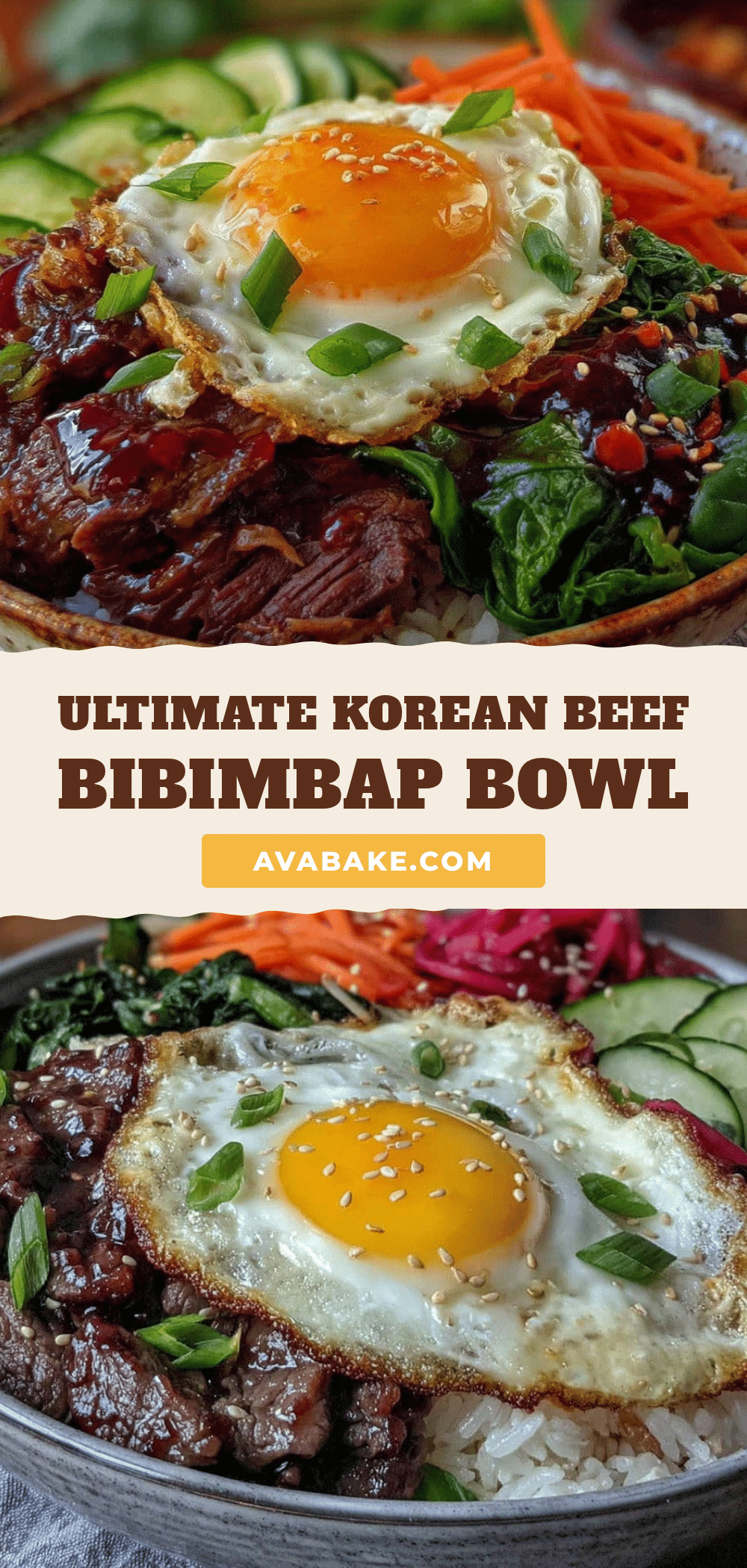
Flavorful Korean Beef Bibimbap Bowl Recipe Easy Homemade Dinner Idea
A vibrant and comforting Korean beef bibimbap bowl with marinated ground beef, fresh sautéed vegetables, a fried egg, and spicy-sweet gochujang sauce. Perfect for a quick, flavorful weeknight dinner or meal prep.
- Prep Time: 10 minutes
- Cook Time: 20 minutes
- Total Time: 30 minutes
- Yield: 4 servings 1x
- Category: Main Course
- Cuisine: Korean
Ingredients
- 1 pound ground beef (80/20 lean-to-fat ratio recommended)
- 3 tablespoons soy sauce
- 2 teaspoons sesame oil
- 1 tablespoon brown sugar
- 2 cloves garlic, finely minced
- 1 teaspoon fresh ginger, grated
- Black pepper, freshly ground, to taste
- 2 cups cooked white rice (preferably short-grain or sushi rice)
- 2 cups fresh spinach, quickly sautéed or blanched
- 1 medium carrot, julienned or shredded
- 1 cup shiitake mushrooms, sliced and sautéed
- 1 cup bean sprouts, rinsed and lightly cooked or raw
- 1 egg per serving, fried sunny side up
- 2 tablespoons gochujang (Korean chili paste), adjust to taste
- 1 teaspoon toasted sesame seeds
- Green onions, thinly sliced, a handful
Instructions
- Cook the Rice: Rinse 1 cup (200 grams) of short-grain rice under cold water until the water runs clear. Add to a saucepan with 1 1/4 cups (300 ml) water. Bring to a boil, then reduce heat to low, cover, and simmer for 15 minutes. Remove from heat and let it sit, covered, for 10 minutes. Fluff with a fork before serving. (If using a rice cooker, cook according to manufacturer’s instructions.)
- Prepare the Vegetables: While the rice cooks, sauté the spinach in a splash of sesame oil until just wilted, about 2 minutes; season lightly with salt and set aside. In the same pan, cook shiitake mushrooms over medium heat with a pinch of salt until tender, about 4 minutes. Julienne or shred the carrot and rinse the bean sprouts; set these aside raw or lightly blanch in boiling water for 30 seconds if you prefer them softer.
- Marinate and Cook the Beef: In a bowl, combine ground beef with soy sauce, sesame oil, brown sugar, minced garlic, grated ginger, and black pepper. Mix gently but thoroughly, being careful not to overwork the meat. Heat a large skillet over medium-high heat, then add the beef mixture. Break it apart with a spatula and cook until browned and cooked through, about 6-8 minutes. Taste and adjust seasoning if needed.
- Fry the Eggs: In a small non-stick pan, heat a teaspoon of oil over medium heat. Crack the eggs carefully and fry sunny side up until the whites are set but the yolks remain runny, about 3-4 minutes. Season lightly with salt and pepper.
- Assemble the Bibimbap Bowl: Scoop warm rice into bowls. Arrange the cooked beef, sautéed spinach, mushrooms, shredded carrots, and bean sprouts in sections around the rice. Place the fried egg on top. Drizzle with gochujang sauce (start with 1 tablespoon and add more to taste). Sprinkle toasted sesame seeds and green onions over everything.
- Serve & Mix: Encourage everyone to mix their bowl thoroughly before eating — that’s where the magic happens, as the spicy sauce and runny egg yolk coat every bite. Enjoy immediately for the best flavors and textures.
Notes
If gochujang is too thick, thin it with a little water or rice vinegar. Use tamari instead of soy sauce for gluten-free. Substitute ground beef with tofu or lentils for a plant-based version. Cauliflower rice can replace white rice for a keto-friendly option. Avoid overcooking beef and vegetables to maintain texture. Fry eggs sunny side up with runny yolks for best flavor.
Nutrition
- Serving Size: 1 bowl with 1 fried
- Calories: 550
- Fat: 18
- Carbohydrates: 55
- Protein: 30
Keywords: Korean beef bibimbap, bibimbap bowl, Korean dinner, ground beef recipe, gochujang, fried egg, easy Korean recipe, weeknight dinner, meal prep bowl