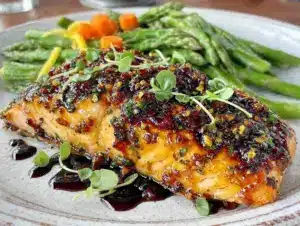
“You won’t believe where I first caught wind of this recipe,” my neighbor Mark said, leaning on the fence that sunny Saturday afternoon. Mark’s not much of a cook—he’s more of a ‘grill and forget’ type—but that day, he swore by his wife’s tangy balsamic salmon. Being the curious soul I am, I grabbed his scribbled recipe off a stained napkin (yes, it was messy) and figured, why not give it a whirl?
That evening, as the kitchen filled with the bright aroma of fresh herbs mingling with balsamic vinegar’s sweet tang, I knew I was onto something different. The salmon, perfectly flaky and kissed by a glossy balsamic glaze, paired effortlessly with crisp spring vegetables I’d tossed together on a whim. Honestly, I’d been hunting for a healthy meal that didn’t feel like a compromise, and this dish hit the spot.
Maybe you’ve been there—looking for a dinner that’s quick, wholesome, and packed with flavor, yet somehow still feels like a treat. This easy tangy balsamic spring salmon recipe brings that to the table. It’s got that zing you didn’t know you needed, balanced by the comforting earthiness of fresh veggies. Plus, the whole thing comes together with minimal fuss, which, let me tell you, is a lifesaver on busy weeknights.
Oh, and fun fact: I accidentally added twice the balsamic vinegar the first time around. Instead of ruining the dish, it gave it an even deeper tang that stuck with me. So don’t sweat a little slip-up—sometimes the best flavors come from happy accidents. This recipe has since become a kitchen favorite, popping up whenever I want a meal that’s healthy, satisfying, and just a little bit special.
Why You’ll Love This Recipe
This easy tangy balsamic spring salmon recipe isn’t just another fish dinner—it’s a celebration of fresh, vibrant flavors that come together effortlessly. Having tested this recipe multiple times (with a few tweaks along the way), I can honestly say it ticks all the boxes for a nourishing, tasty meal that’s quick enough for busy days.
- Quick & Easy: Ready in under 30 minutes, it’s perfect for nights when time isn’t on your side.
- Simple Ingredients: You probably have most of these in your pantry or fridge already—no need for exotic shopping trips.
- Perfect for Spring: The fresh vegetables capture the season’s best, making it a bright and lively plate.
- Crowd-Pleaser: Even picky eaters tend to love the balance of tangy and savory flavors here.
- Unbelievably Delicious: The balsamic glaze adds the right touch of sweetness and acidity to the tender salmon.
What makes this recipe stand out is the way the balsamic vinegar is reduced just right to coat the salmon, giving it that glossy, tangy finish without overpowering the natural flavors. The fresh vegetables aren’t just sides; they’re an integral part that adds crunch and color. Plus, this isn’t your run-of-the-mill baked salmon—there’s a little sass and zing that keeps you coming back for more.
This dish feels like a healthy indulgence, the kind of meal you savor without guilt but with all the satisfaction of a well-made restaurant plate. Whether you’re whipping it up for family or just treating yourself, it’s a recipe that makes eating well feel easy and enjoyable.
What Ingredients You Will Need
This recipe uses simple, wholesome ingredients to deliver bold flavor and satisfying texture without the fuss. Most are pantry staples, with fresh spring vegetables adding that seasonal brightness. You can swap or adjust ingredients depending on what you have at home or your taste preferences.
- For the Salmon:
- 4 salmon fillets (6 oz / 170 g each), skin-on or skinless depending on preference
- 2 tablespoons balsamic vinegar (I like Colavita for its smoothness)
- 1 tablespoon olive oil (extra virgin for best flavor)
- 1 teaspoon honey or maple syrup (balances the tanginess)
- 2 cloves garlic, minced (fresh is best)
- Salt and freshly ground black pepper, to taste
- Fresh thyme sprigs (about 4), for aroma and subtle earthiness
- For the Fresh Vegetables:
- 1 cup asparagus, trimmed and cut into 2-inch pieces (seasonal spring favorite)
- 1 cup sugar snap peas, trimmed
- 1 cup cherry tomatoes, halved
- 1 small red onion, thinly sliced
- 1 tablespoon olive oil
- Salt and pepper, to taste
- Fresh basil leaves (optional, for garnish and fresh flavor)
Substitution tips: If you want a gluten-free version, this recipe is naturally safe. For a vegan twist, swap salmon with thick slices of marinated tofu or cauliflower steaks and adjust cooking time accordingly. You can also use lemon juice instead of balsamic vinegar for a lighter tang, although it changes the flavor profile.
Equipment Needed
- Non-stick or cast-iron skillet (I personally prefer cast iron for its even heat retention and searing ability)
- Mixing bowls for marinade and vegetables
- Sharp chef’s knife for prepping vegetables and salmon
- Cutting board
- Tongs or spatula for flipping salmon without breaking the fillets
- Measuring spoons and cups for accuracy
- Baking sheet or roasting pan (optional if you prefer oven-roasting vegetables)
For budget-friendly cooks, a good non-stick skillet works just fine and is easier to clean. If using cast iron, make sure it’s well-seasoned to prevent sticking. A sharp knife will make vegetable prep quicker and safer—trust me, dull knives lead to more kitchen chaos.
Preparation Method
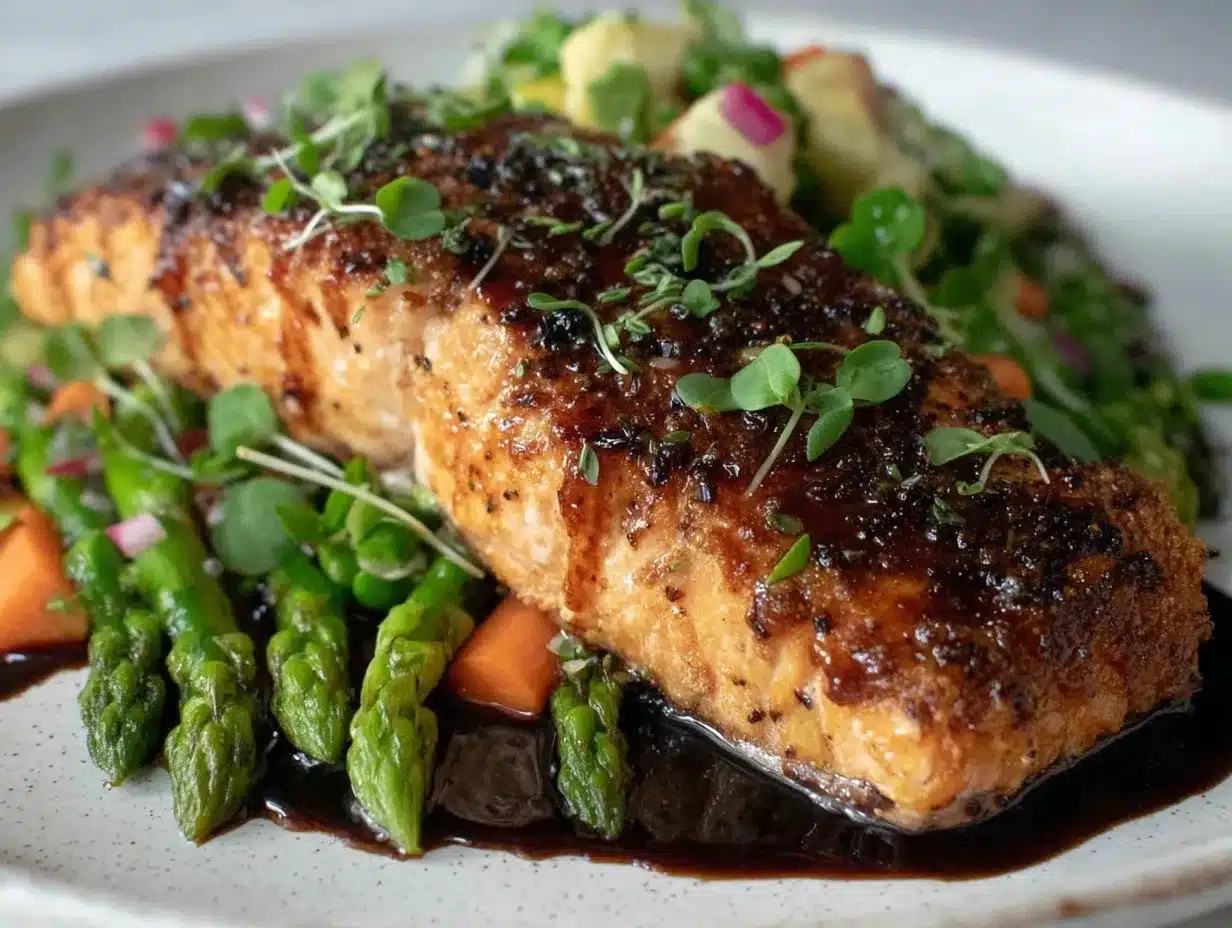
- Prepare the balsamic glaze: In a small bowl, whisk together 2 tablespoons balsamic vinegar, 1 tablespoon olive oil, minced garlic, and honey. Season with a pinch of salt and pepper. This mixture will give your salmon that signature tangy glaze. (Prep time: 5 minutes)
- Marinate the salmon: Pat the salmon fillets dry with paper towels. Place them in a shallow dish and pour half of the balsamic glaze over them, turning to coat evenly. Let them sit for about 10 minutes while you prep the vegetables. (Tip: Don’t marinate longer than 15 minutes or the vinegar might start “cooking” the fish.)
- Prepare the vegetables: In a mixing bowl, toss asparagus, sugar snap peas, cherry tomatoes, and red onion with 1 tablespoon olive oil, salt, and pepper. Set aside. (Prep time: 5 minutes)
- Cook the salmon: Heat a skillet over medium-high heat. Once hot, add the salmon fillets skin-side down (if skin-on). Cook for about 4-5 minutes until the skin is crisp and the fillet is halfway cooked through. Flip the salmon carefully using a spatula or tongs. Brush the remaining balsamic glaze on the cooked side, and cook for another 3-4 minutes until the salmon flakes easily with a fork. (Watch out for flare-ups if your glaze drips!)
- Sauté the vegetables: While the salmon cooks, in another pan or the oven (400°F / 200°C for 10-12 minutes), cook the vegetables until tender-crisp. They should still have a bit of bite to contrast with the soft salmon. Toss occasionally and avoid overcooking to keep colors vibrant and flavors fresh.
- Plate the dish: Arrange the sautéed vegetables on plates, top with the salmon fillet, and garnish with fresh thyme sprigs and optional basil leaves for an herbal pop. A light drizzle of any leftover glaze can add extra shine and tang.
Pro tip: Keep an eye on the salmon’s thickness—thicker fillets may need a minute or two more per side. Also, if the glaze thickens too much while cooking, add a splash of water to loosen it up.
Cooking Tips & Techniques
Getting salmon just right can be a little tricky, but with a few tricks up your sleeve, it’s a breeze. First, always start with dry salmon—patting it down helps you get that nice sear and prevents sticking.
When cooking the salmon skin-side down, press gently with your spatula for the first 30 seconds. This keeps the fillet flat against the pan, helping the skin crisp up evenly. Don’t rush flipping—salmon needs a confident flip to avoid breaking apart.
Reducing balsamic vinegar is key here. If you try to cook it too fast, it can burn and taste bitter. Keep the heat moderate and stir often to get that perfect sticky glaze.
For vegetables, timing is everything. I learned the hard way that overcooked asparagus turns mushy real fast. Keep them bright and crisp to balance the tender salmon.
Multitasking tip: While the salmon cooks, toss the veggies in the oven to save stove space and time. Just check on them halfway through to prevent burning.
Remember, not all salmon is created equal. Wild-caught tends to have a firmer texture and richer flavor, but farmed works well too—just adjust cooking time slightly.
Variations & Adaptations
- Herb Twist: Swap thyme for rosemary or dill for a different herbal note that complements the salmon beautifully.
- Spicy Kick: Add a pinch of red pepper flakes to the balsamic glaze for a subtle heat that wakes up the palate.
- Vegetarian Version: Replace salmon with thick-cut portobello mushrooms or tofu steaks marinated in the same balsamic glaze, then grilled or pan-fried.
- Seasonal Veggies: In cooler months, swap asparagus and snap peas for roasted carrots and Brussels sprouts for a heartier feel.
- Low-Sodium Option: Reduce or omit added salt and use low-sodium balsamic vinegar to control sodium intake without losing flavor.
One time, I swapped in mango salsa on top instead of the glaze for a sweet-tangy contrast that was surprisingly refreshing—a fun summer spin that my family still talks about.
Serving & Storage Suggestions
Serve this easy tangy balsamic spring salmon warm, fresh off the stove or oven. The glaze shines brightest when glossy and warm, so try to plate it quickly after cooking. Garnishing with fresh herbs adds a lovely visual pop and lifts the flavors.
This dish pairs well with a chilled glass of crisp white wine like Sauvignon Blanc or a light sparkling water with lemon for a refreshing touch. For sides, a simple quinoa salad or crusty whole-grain bread rounds out the meal nicely.
If you have leftovers, store salmon and vegetables separately in airtight containers in the refrigerator for up to 2 days. Reheat gently in a skillet over low heat or in the oven to keep the glaze from drying out. Microwave reheating works in a pinch but can make the salmon a bit rubbery.
Flavors do mellow slightly after resting, so if you have time, letting the salmon sit 10 minutes before serving can deepen the balsamic notes. Just don’t let it get cold!
Nutritional Information & Benefits
This recipe is a wholesome powerhouse packed with protein, omega-3 fatty acids, and a rainbow of vitamins and minerals from fresh vegetables. A typical serving contains approximately:
| Nutrient | Amount |
|---|---|
| Calories | 350-400 kcal |
| Protein | 35 g |
| Fat | 18 g (mostly healthy fats) |
| Carbohydrates | 12 g |
| Fiber | 4 g |
Salmon’s omega-3s support heart and brain health, while the fresh vegetables provide antioxidants and fiber for digestion. This meal is naturally gluten-free and low in carbs, making it suitable for many dietary preferences. Just watch out if you have a fish allergy!
Personally, I love how this recipe feels nourishing without weighing me down. It’s a reminder that healthy meals don’t have to be boring or bland—they can be vibrant, exciting, and downright delicious.
Conclusion
If you’re looking for a healthy meal that’s quick, tasty, and packed with springtime freshness, this easy tangy balsamic spring salmon with fresh vegetables is a winner. It’s the kind of recipe that fits into busy lives but still makes you feel like you’ve put in a little extra care—and honestly, that glaze is hard to beat.
Feel free to tweak the veggies or herbs to suit your mood or the season. The best part is that it’s forgiving and adaptable, so you can make it truly your own. I keep coming back to this recipe because it’s dependable, delicious, and never fails to brighten my dinner table.
Give it a try, and let me know how you make it yours! Drop a comment below or share your favorite twists—I love hearing your stories. Here’s to good food that’s simple, satisfying, and made for real life.
FAQs
Can I use frozen salmon fillets for this recipe?
Yes, but make sure to thaw them completely and pat dry before marinating to avoid excess moisture, which can affect searing.
What if I don’t have balsamic vinegar on hand?
You can substitute with red wine vinegar mixed with a little honey or maple syrup to mimic the sweet-tangy balance, but the flavor will be slightly different.
How do I know when the salmon is cooked through?
The salmon should flake easily with a fork and have an opaque color inside. Depending on thickness, this usually takes about 7-9 minutes total.
Can I prepare the vegetables ahead of time?
Absolutely! Chop and toss them with oil and seasoning in advance, then roast or sauté just before serving for best freshness.
Is this recipe suitable for meal prep?
Definitely. Store salmon and veggies separately in airtight containers and reheat gently. The flavors hold up well for 1-2 days in the fridge.
Pin This Recipe!
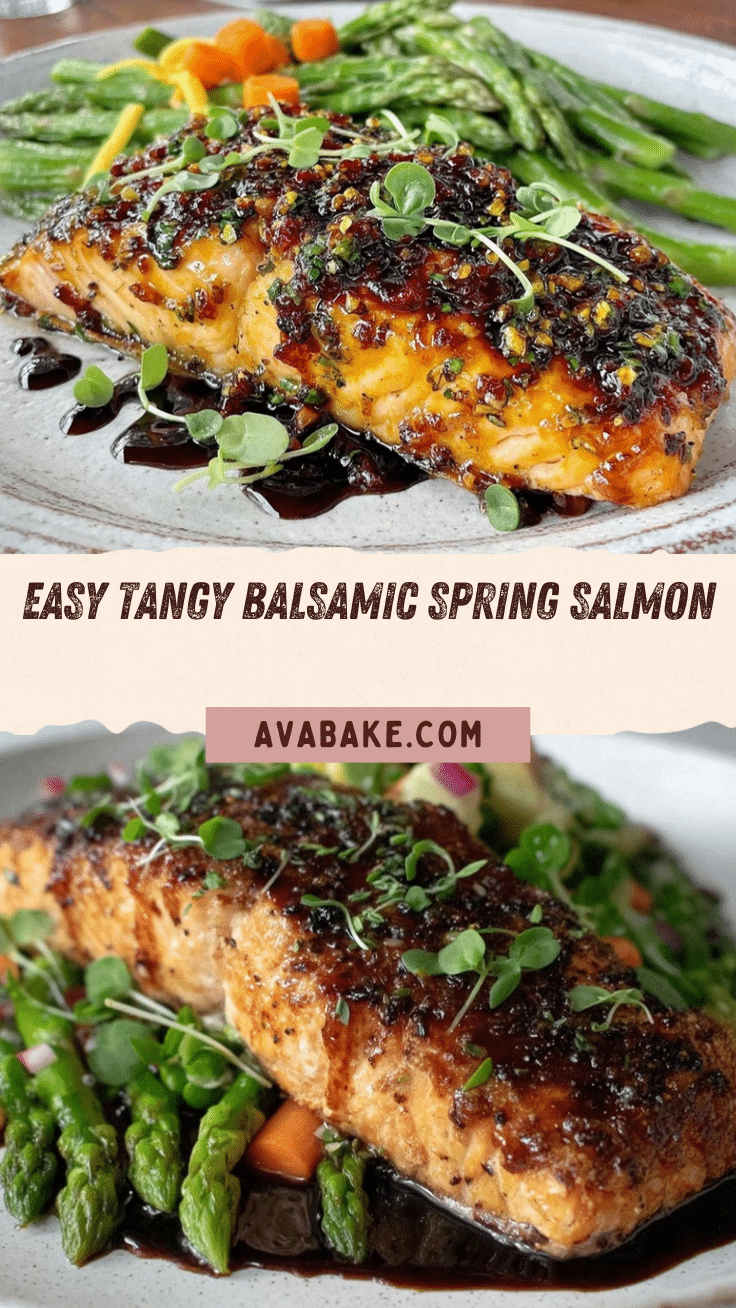
Easy Tangy Balsamic Spring Salmon Recipe with Fresh Vegetables for Perfect Healthy Meals
A quick and wholesome salmon dish glazed with a tangy balsamic reduction, paired with crisp spring vegetables for a healthy and flavorful meal.
- Prep Time: 15 minutes
- Cook Time: 15 minutes
- Total Time: 30 minutes
- Yield: 4 servings 1x
- Category: Main Course
- Cuisine: American
Ingredients
- 4 salmon fillets (6 oz / 170 g each), skin-on or skinless depending on preference
- 2 tablespoons balsamic vinegar
- 1 tablespoon olive oil (extra virgin)
- 1 teaspoon honey or maple syrup
- 2 cloves garlic, minced
- Salt and freshly ground black pepper, to taste
- Fresh thyme sprigs (about 4)
- 1 cup asparagus, trimmed and cut into 2-inch pieces
- 1 cup sugar snap peas, trimmed
- 1 cup cherry tomatoes, halved
- 1 small red onion, thinly sliced
- 1 tablespoon olive oil
- Salt and pepper, to taste
- Fresh basil leaves (optional, for garnish)
Instructions
- Prepare the balsamic glaze: In a small bowl, whisk together 2 tablespoons balsamic vinegar, 1 tablespoon olive oil, minced garlic, and honey. Season with a pinch of salt and pepper.
- Marinate the salmon: Pat the salmon fillets dry with paper towels. Place them in a shallow dish and pour half of the balsamic glaze over them, turning to coat evenly. Let sit for about 10 minutes.
- Prepare the vegetables: In a mixing bowl, toss asparagus, sugar snap peas, cherry tomatoes, and red onion with 1 tablespoon olive oil, salt, and pepper. Set aside.
- Cook the salmon: Heat a skillet over medium-high heat. Add salmon fillets skin-side down if skin-on. Cook 4-5 minutes until skin is crisp and fillet is halfway cooked. Flip carefully, brush remaining glaze on cooked side, and cook another 3-4 minutes until salmon flakes easily.
- Sauté the vegetables: While salmon cooks, cook vegetables in another pan or roast in oven at 400°F (200°C) for 10-12 minutes until tender-crisp.
- Plate the dish: Arrange vegetables on plates, top with salmon fillet, garnish with fresh thyme sprigs and optional basil leaves. Drizzle any leftover glaze on top.
Notes
Do not marinate salmon longer than 15 minutes to avoid ‘cooking’ the fish with vinegar. Keep an eye on salmon thickness for cooking time adjustments. If glaze thickens too much, add a splash of water to loosen. For vegan version, substitute salmon with marinated tofu or cauliflower steaks and adjust cooking time. Use lemon juice instead of balsamic vinegar for a lighter tang. Store leftovers separately and reheat gently to preserve glaze and texture.
Nutrition
- Serving Size: 1 salmon fillet with
- Calories: 350400
- Sugar: 5
- Sodium: 150
- Fat: 18
- Saturated Fat: 3
- Carbohydrates: 12
- Fiber: 4
- Protein: 35
Keywords: salmon recipe, balsamic salmon, healthy dinner, spring vegetables, quick salmon, easy salmon recipe, balsamic glaze, healthy meals